Boston’s best sunrise and sunset photo spots offer breathtaking views of the city’s iconic skyline, historic charm, and waterfront beauty. Capture unforgettable moments with these essential, beginner-friendly locations and tips for stunning photography.
Boston is a city that truly shines at dawn and dusk. The magical light of sunrise and sunset transforms its historic streets and modern architecture into something truly special. If you’re a traveler looking to capture these moments, knowing where to go can make all the difference. Don’t worry if you’re new to photography; this guide is designed for everyone. We’ll help you find the most stunning vantage points and give you simple tips to make your photos pop. Get ready to witness Boston in a whole new light!
Let’s dive into the best places to catch those golden hours and make your Boston trip even more memorable with photos you’ll cherish.
Why Photographing Boston’s Sunrises & Sunsets is a Must

There’s something uniquely captivating about the way light plays across Boston. The city’s mix of old and new architecture, its proximity to the water, and its distinct seasons all contribute to a dynamic visual experience during sunrise and sunset. For photographers, these “golden hours” offer soft, warm light that can dramatically enhance any scene, bringing out textures, colors, and moods that are often missed in the midday sun.
For travelers, capturing these moments isn’t just about taking pretty pictures; it’s about bottling the essence of Boston. It’s about pausing to appreciate a quiet moment before the city buzzes to life or soaking in the peaceful finale as the day winds down. These photographs become visual souvenirs, carrying the memory of the city’s beauty and your travel experience.
The Best Boston Sunrise Spots
Sunrises in Boston are often a spectacle of soft, pastel colors painting the sky, casting a warm glow over the historic cityscape. Waking up early is rewarded with fewer crowds and a serene atmosphere.
1. Christopher Columbus Waterfront Park
This beautiful waterfront park offers expansive views of Boston Harbor and the city skyline. As the sun rises, you’ll see the light creep over the water, illuminating the USS Constitution and the surrounding piers. It’s a fantastic spot for wide-angle shots that include both the water and the city.
Why it’s great: Open vistas, harbor reflections, and early morning tranquility.
What to expect: Gentle breeze, sounds of the harbor, and a peaceful start to the day.
Photography tips: Use a tripod for sharper images in low light. Experiment with long exposures to smooth out the water.
2. Castle Island (Fort Independence)
Located in South Boston, Castle Island offers unique perspectives with Fort Independence as a foreground element. The sunrise here can be dramatic, with light breaking over the ocean and casting long shadows across the fort’s walls. It provides a sense of history and grandeur.
Why it’s great: Historic fort, ocean views, and a distinct Boston landmark.
What to expect: Seagulls, fresh sea air, and a less crowded experience than downtown.
Photography tips: Frame your shots with the fort’s architecture. Look for silhouettes against the colorful sky.
For more information on planning your visit to Castle Island and its historical significance, check out the Massachusetts DCR page.
3. Esplanade Benches along the Charles River
The banks of the Charles River are a classic Boston viewing point. Find a comfortable bench on the Esplanade, and you’ll have a clear view of the Back Bay skyline. As the sun ascends, it backlights the skyscrapers, creating a beautiful silhouette effect that’s perfect for minimalist photography.
Why it’s great: Iconic skyline views, peaceful riverfront, and accessible location.
What to expect: Early morning joggers, dog walkers, and a refreshing river atmosphere.
Photography tips: Focus on the city’s silhouette. Use the river’s reflection to add symmetry to your photos.
4. Bunker Hill Monument
For a higher vantage point and a dose of history, head to the Bunker Hill Monument in Charlestown. While the monument itself is a focal point, the surrounding area offers views that can catch the early morning light as it illuminates the North End and the harbor.
Why it’s great: Elevated views, historical significance, and a less common perspective.
What to expect: A peaceful, historic neighborhood and panoramic city glimpses.
Photography tips: Capture the monument against the rising sun or use it as an anchor for wider city shots.
Learn about the history of the Bunker Hill Monument and plan your visit at the National Park Service website.
The Best Boston Sunset Spots
Sunsets in Boston are often fiery spectacles, with colors ranging from vibrant oranges and reds to soft purples and pinks. The city lights begin to twinkle as the sky puts on its show, creating a magical atmosphere.
1. Acorn Street (Beacon Hill)
While not a panoramic view, Acorn Street offers an iconic, charming Boston experience bathed in the warm, setting sun. The cobblestone street and historic row houses of Beacon Hill create a picturesque scene. The low angle of the setting sun casts a beautiful, soft light on the brickwork and gas lamps.
Why it’s great: Quintessential Boston charm, historic architecture, and intimate street scenes.
What to expect: Cobblestones, quaint homes, and a romantic ambiance.
Photography tips: Position yourself at the bottom of the street looking up for the best perspective. Look for golden light on the brick and windows.
2. Fan Pier Park (Seaport District)
This modern park in the Seaport District provides stunning westward views across Boston Harbor towards the city skyline. As the sun dips below the horizon, it lights up the sky behind the skyscrapers, creating dramatic reflections on the water and the glass facades of the buildings.
Why it’s great: Contemporary architecture, harbor views, and vibrant sunset colors.
What to expect: Modern urban landscape, bustling atmosphere, and excellent photo opportunities.
Photography tips: Focus on the interplay of light and shadow on the buildings. Use the waterfront to capture reflections.
3. Monumental Steps of the Museum of Fine Arts (MFA)
The steps of the MFA offer a grand, elevated perspective looking east towards the Fenway area and beyond. While the primary view is eastward, the warm, diffused light of sunset can still illuminate the museum’s facade beautifully and create a lovely ambiance across the surrounding parkland.
Why it’s great: Majestic building, elevated view, and a cultural backdrop.
What to expect: Art lovers, visitors, and a serene, classical setting.
Photography tips: Capture the golden hour light hitting the museum’s architecture. Consider wide shots to include the surrounding park.
4. Old North Church Area (North End)
Exploring the historic North End as the sun sets can yield wonderful photographic moments. The narrow streets, gas lamps, and historic buildings, like the Old North Church, are beautifully illuminated by the warm, fading light. It’s a more intimate, atmospheric experience.
Why it’s great: Historic atmosphere, charming narrow streets, and iconic landmarks.
What to expect: Italian heritage, delicious food smells, and a step back in time.
Photography tips: Look for opportunities to capture light streaks from street lamps. Frame shots using architectural elements.
5. Aboard a Sunset Cruise
For a truly unique perspective, consider a sunset cruise on Boston Harbor. This offers unparalleled, unobstructed views of the city skyline as it transforms under the twilight. You’ll get panoramic vistas and reflections on the water that are impossible to capture from land.
Why it’s great: 360-degree views, unique vantage point, and a memorable experience.
What to expect: Sea breeze, stunning cityscapes, and a relaxing way to see Boston.
Photography tips: Brace yourself for movement and wind. Shoot with a fast shutter speed if possible and consider a polarizing filter.
Many companies offer sunset cruises. You can explore options and book tickets through services like Boston Harbor Cruises.
Essential Photography Tips for Beginners
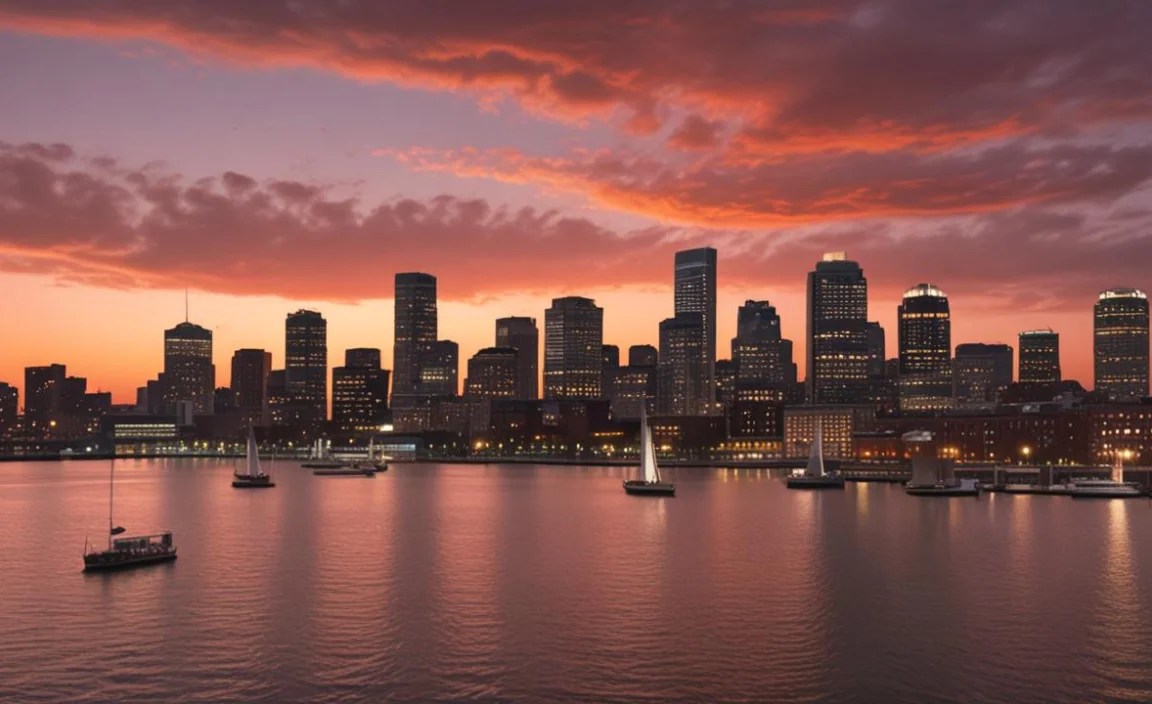
Capturing great sunrise and sunset photos doesn’t require professional gear. With a few simple technique adjustments, you can significantly improve your results.
1. Plan Your Visit
Check the Weather: Clear skies are ideal, but dramatic clouds can add depth. A little research on the weather forecast can help you prepare.
Know the Sunrise/Sunset Times: Use a reliable app or website to know exactly when the sun will rise and set. Arrive at least 30 minutes early for sunrise and stay 30 minutes after sunset for “blue hour.”
Scout Locations: If possible, visit your chosen spot during the day to get a feel for the best angles and potential obstacles.
2. Camera Settings (Simplified)
ISO: Keep your ISO as low as possible (e.g., 100-400) to minimize image noise. Higher ISOs are for very low-light situations and can make your photos look grainy.
Aperture: For landscapes, a mid-range aperture like f/8 or f/11 is often best, as it provides good depth of field (keeping most of the scene in focus).
Shutter Speed: This will vary depending on the light. In low light, you’ll need a slower shutter speed. This is where a tripod becomes very useful.
White Balance: While “Auto” often works, trying “Cloudy” or “Daylight” presets can sometimes give warmer, more pleasing tones for sunrises and sunsets.
Shooting Mode: Consider using “Aperture Priority” (Av or A) mode. You set the aperture, and the camera chooses the shutter speed. This is a great way to control depth of field.
3. Composition Basics
Rule of Thirds: Imagine your photo divided into nine equal sections by two horizontal and two vertical lines. Place key elements along these lines or at their intersections for a more balanced and engaging image.
Leading Lines: Use natural lines like roads, paths, or the edge of a pier to draw the viewer’s eye into the photo, often towards your main subject.
Foreground Interest: Don’t forget what’s in front of your main subject. Adding something interesting in the foreground (like rocks, a fence, or a person) can add depth and context.
Silhouettes: When the sun is very bright, try exposing for the sky. This will make foreground objects appear as dark silhouettes, which can be very dramatic. Mount Auburn Cemetery is a great place to find interesting foreground elements.
4. Essential Gear (Beyond Your Camera)
Tripod: Absolutely essential for sharp photos in low light. It allows you to use slower shutter speeds without camera shake.
Remote Shutter Release or Timer: Prevents camera shake when you press the shutter button. Most cameras have a built-in timer.
Extra Batteries: Cold weather and long exposures can drain batteries quickly.
Lens Cloth: Keep your lens free of smudges that can ruin shots.
Comfortable Shoes: You’ll likely be doing a lot of walking and standing.
Warm Layers: Even in warmer months, early mornings and late evenings can be cool, especially near the water.
Packing for Comfort: Travel Essentials for Photography Trips

When you’re out chasing the perfect sunrise or sunset photo, comfort is key. Being comfortable allows you to stay longer, wait for the right light, and enjoy the experience.
For Solo Travelers and Photographers
Lightweight Backpack: Easy to carry your gear and essentials. Look for one with padded compartments for your camera.
Comfortable Walking Shoes: You’ll be on your feet. Prioritize support and cushioning.
Breathable Layers: Pack t-shirts, a light jacket, and maybe a packable down vest. You can add or remove layers as needed.
Water Bottle: Staying hydrated is important. A reusable bottle is eco-friendly and saves money.
For Families Traveling with Children
Traveling with little ones adds another layer to packing, especially when it comes to ensuring their comfort and managing potential needs.
Child Diapers: If your child uses them, consider discreet and comfortable options like discreet adult diapers designed for active lifestyles. These are often more absorbent and provide better leak protection for longer outings. Brands like Tranquility or Depend offer various styles that offer security without being bulky.
Comfortable Stroller or Carrier: For younger children, this is a lifesaver for long waits or extensive walking.
Snacks and Drinks: Always have plenty of familiar snacks and drinks to keep energy levels up and spirits high.
Entertainment: A book, a small toy, or a tablet can be a great distraction during waiting times.
Weather-Appropriate Clothing: Layers are still key, but ensure rain gear or sun hats are on hand based on the forecast.
When selecting travel-friendly diaper options, look for descriptions like “discreet,” “odor control,” and “high absorbency” to ensure comfort and confidence for both adults and children. Resources like Health.com reviews can offer comparisons for different needs.
Essential Accessories
Portable Power Bank: Keep your phone and other devices charged.
Small First-Aid Kit: For minor scrapes or blisters.
Snacks: Essential for long photo shoots.
Hat and Sunglasses: Even during golden hour, the sun can be bright.
Table: Sunrise vs. Sunset Photo Spot Comparison
To help you decide where to aim your lens, here’s a quick comparison of some prime sunrise and sunset spots.
| Location | Best For Sunrise | Best For Sunset | Key Feature | Beginner Friendliness |
| Christopher Columbus Waterfront Park | Harbor views, city silhouette, peaceful start | City skyline catching late light, harbor reflections | Expansive harbor vista | High |
| Castle Island | Ocean sunrise, historic fort | N/A (best for sunrise) | Iconic fort and ocean | Medium |
| Esplanade Benches | Back Bay skyline illuminated from behind | City lights appearing as sky fades, river reflections | Classic city skyline view | High |
| Bunker Hill Monument | North End glow, harbor glimpses | Setting sun behind the monument | Elevated historical perspective | Medium |
| Acorn Street | N/A (less ideal for sunrise views) | Golden hour light on historic architecture | Quintessential charming Boston street | High |
| Fan Pier Park | Harbor light touching modern buildings | Dramatic skyline silhouettes, harbor sunset glow | Modern Seaport and harbor panorama | High |
| MFA Steps | Soft morning light on facade, park views | Warm evening light on grand architecture | Elegant building and elevated park views | High |
| North End Streets | N/A (better for sunset’s atmosphere) | Gas lamps, historic buildings bathed in warm light | Historic, intimate streetscapes | Medium |
| Sunset Cruise | N/A (best for sunset views) | Unobstructed 360-degree skyline as sun sets | Panoramic, unobstructed city views | High |
Frequently Asked Questions (FAQ)
Q1: What is the best time of day to take photos in Boston?
The best times are during the “golden hours” – about an hour after sunrise and an hour before sunset. The light is soft, warm, and creates beautiful shadows, making the city look magical.
Q2: Do I need a professional camera to get good Boston sunset photos?
No, not at all! Modern smartphone cameras are incredibly capable. Focus on composition, finding good light, and using basic editing apps. If you have a DSLR or mirrorless camera, great, but don’t let gear be a barrier.
Q3: What are the biggest challenges when photographing at sunrise or sunset?
The light changes rapidly, so you need to be quick. It can also be quite dark, so a tripod is very helpful for sharper images. Crowds can sometimes be an issue at popular spots, so arriving early is often recommended.
Q4: Can I climb Bunker Hill Monument for a view?
Yes, you can! During its open hours, you can climb the 294 steps to the top for a rewarding panoramic view of Boston and the harbor. It’s a great spot for photography, especially at sunrise or sunset.
Q5: Where is the most iconic view of the Boston skyline?
While there are many great vantage points, the view from across the Charles River on the Esplanade, or from a spot in the Seaport District like Fan Pier Park, offers iconic, unobstructed views of the entire skyline.
Q6: How can I avoid blurry photos when shooting in low light?
The best way is to use a tripod to keep your camera completely still. If you don’t have a tripod, try to brace your camera against a stable object like a wall or railing, and use your camera’s built-in timer to avoid camera shake when pressing the shutter button.